
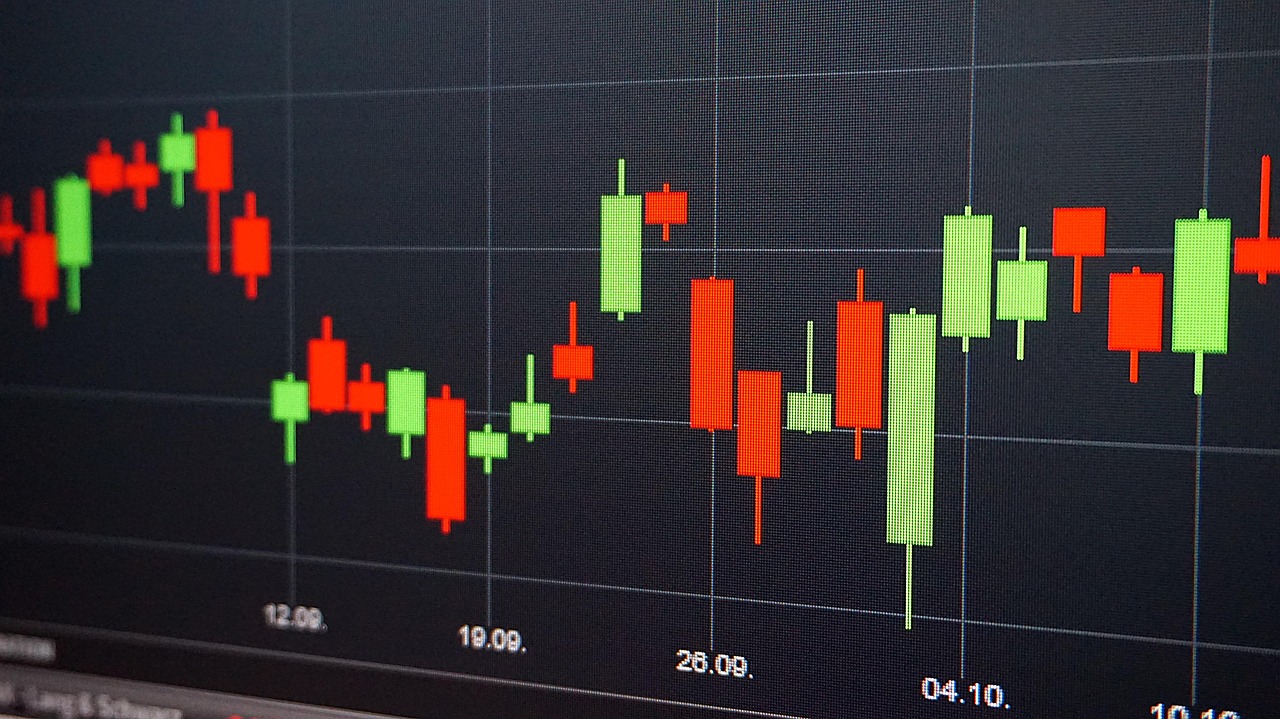
A technical indicator is a tool used in technical analysis to study market trends and forecast potential price movements. These indicators utilize historical data, such as price, trading volume and open interest, to assist traders in identifying optimal entry and exit points within the market. Popular technical indicators include RSI, MFI, MACD and Moving Averages.
In this article, we will explore some of the most widely used technical indicators in the stock market. These indicators employ mathematical calculations based on past market data to analyse the market’s direction, momentum, and the strength of its trends. Traders and analysts worldwide utilize these indicators to make more informed trading decisions.
What are Technical Indicators?
A technical indicator is a mathematical tool used in technical analysis to study a security’s price movements, trading volume and open interest. Traders utilize these indicators to analyze historical market data and to identify potential future market trends and price movements.
Technical indicators typically appear in the form of graphs alongside price charts, making it easier for traders to understand market behavior and the direction of trends. These indicators also assist traders in identifying potential buying and selling opportunities within the market.
There are two primary types of technical indicators: Overlays and Oscillators. Overlays appear directly on the price chart, whereas Oscillators fluctuate within a fixed range either above or below the chart. Some of the most widely used technical indicators include RSI, MACD, Bollinger Bands, Moving Averages, MFI and Stochastic Indicators.
Traders commonly employ technical indicators in stock, commodity, and forex markets, as these markets provide the historical trading data necessary for technical analysis.
Types of Technical Indicators
1. Oscillators
Oscillators are technical indicators that fluctuate within a fixed range, moving between minimum and maximum values. Traders use them to measure market momentum and to identify overbought or oversold conditions. These indicators help identify potential trend reversals and price turning points, particularly in sideways or range-bound markets.
Many oscillators utilize similar mathematical calculations and often provide comparable signals. Consequently, traders typically avoid using too many oscillators on a single chart. Popular oscillator indicators include the RSI and Stochastic indicators.
2. Overlays
Overlays are technical indicators that appear directly on the price chart. Traders also use them to analyse market trends, price strength, and overbought or oversold conditions. These indicators also assist in analysing market supply and demand.
Common overlay indicators include Moving Averages and Bollinger Bands. Moving Averages help identify the direction and strength of market trends, while Bollinger Bands help measure price volatility and potential market movements.
Commonly Used Technical Indicators
Technical indicators help traders analyse market trends, price direction, momentum, volatility, and trading volume. In technical analysis, various indicators are employed for different purposes. Some indicators fall into the category of oscillators, while others are utilized as overlays directly on price charts.
Oscillator Indicators
Relative Strength Index (RSI)
The RSI is a momentum indicator that measures the speed and strength of price movements. Traders use the RSI to identify overbought and oversold conditions, particularly in sideways or range-bound markets. The value of the RSI ranges between 0 and 100.
Average Directional Index (ADX)
The ADX assists traders in measuring the strength of a market trend. A high ADX value typically indicates a strong trend, whereas a low value suggests a weak or sideways market movement.
Money Flow Index (MFI)
The MFI combines price and trading volume data to measure buying and selling pressure within the market. Traders often refer to it as a volume-weighted momentum indicator, as it tracks the flow of money entering into and exiting from a security.
Moving Average Convergence Divergence (MACD)
The MACD helps traders analyse trend direction, momentum, and potential entry or exit points. It is based on the relationship between short-term and long-term exponential moving averages. When the MACD line crosses above or below the signal line, it may indicate a shift in the direction of the trend.
Overlay Indicators
Moving Averages
Moving Averages are trend-following indicators that smooth out price fluctuations and help traders identify the market’s direction more clearly. Traders typically use them to assess the strength of a trend and identify potential support or resistance levels.
Bollinger Bands
Bollinger Bands consist of upper and lower bands positioned alongside a central moving average line. These bands expand and contract in response to market volatility. Traders utilize Bollinger Bands to gauge volatility levels and identify potential overbought or oversold conditions.
Support and Resistance
Support and Resistance levels assist traders in identifying potential price reversal zones. Resistance indicates a price level where selling pressure may prevent prices from rising further, whereas Support denotes a level where buying pressure may stop further declines.
Volume-Based Indicators
On-Balance Volume (OBV)
OBV employs trading volume to measure buying and selling pressure within the market. A rising OBV typically signals increased buying pressure, whereas a declining OBV may indicate growing selling pressure.
Accumulation/Distribution Line (A/D Line)
The Accumulation/Distribution Line measures the flow of money into or out of a security by analysing both price movement and trading volume. An upward-trending A/D line generally signifies buying pressure, while a downward trend may suggest selling pressure.
These indicators empower traders to analyse various market conditions and make more informed trading decisions. Many traders use multiple indicators in combination to improve the accuracy of their technical analysis.
Advantages of Technical Indicators
- Technical indicators are easy to understand and utilize for market analysis.
- Indicators help minimize emotional trading by providing logical trading signals.
- Traders can employ technical indicators across stocks, forex, commodities and cryptocurrency markets.
- Technical indicators assist in setting stop-loss levels and managing trading risks.
- Traders can backtest indicator-based strategies using historical market data.
Disadvantages of Technical Indicators
- Technical indicators may occasionally generate false trading signals.
- Since many indicators rely on historical price data, the signals they provide may appear with a delay.
- Using an excessive number of indicators simultaneously can lead to confusion during the analysis process.
- Sudden market news or economic events can compromise the accuracy of technical indicators.
- Over-reliance on indicators alone may cause traders to overlook fundamental market factors.
- Some technical indicators may prove difficult for beginners to fully comprehend.
Frequently Ask Questions on Technical Indicator
Which Technical Indicator is best for beginners?
Moving Averages are among the simplest technical indicators for beginners, as they clearly indicate whether prices are trending upwards or downwards. They help traders easily identify market trends. The RSI is also suitable for beginners, as it assists in identifying overbought and oversold conditions within the market.
Can indicators guarantee profit?
No. Indicators provide signals, but risk management and discipline are essential.
What is a Technical Indicator?
A technical indicator is a tool used in technical analysis to forecast potential future price movements by studying historical market data. It helps traders understand market trends, price volatility, and momentum, enabling them to make better trading decisions.
What is the difference between Leading and Lagging Indicators?
Leading indicators help traders anticipate potential future price movements before a trend has fully developed. Lagging indicators confirm a market trend after it has already begun. While lagging indicators provide more concrete confirmation, leading indicators assist traders in identifying early trading opportunities.
What is the Relative Strength Index (RSI)?
The Relative Strength Index (RSI) is a momentum indicator that measures the speed and strength of recent price movements. Traders use the RSI to identify ‘overbought’ and ‘oversold’ conditions in the market. The value of the RSI ranges from 0 to 100. Generally, an RSI reading above 70 indicates an ‘overbought’ condition, while a reading below 30 indicates an ‘oversold’ condition.
Conclusion
Technical indicators are essential tools in technical analysis, helping traders and investors study price movements, market trends, momentum and volatility.
Although technical indicators provide valuable market insights, traders should not rely solely on them. Technical indicators can enhance trading decisions when combined with proper risk management and other forms of analysis. Through a proper understanding and practical application, technical indicators assist traders and investors in making more informed decisions within the financial markets.
Disclaimer
This article is for educational purposes only and not financial advice. I am not a SEBI-registered advisor. Please consult your financial advisor before investing.
If you have any questions, feel free to contact us.
Thank you for visiting our StockTrades Blog.

Mrunmay is a Data Analytics enthusiast with a background in Software Engineering and Machine Learning. He has completed professional training in SQL, Python, Data Analysis and ML and has worked on multiple data-driven projects. With a strong interest in stock market analysis and technical trading strategies, he focuses on simplifying complex market concepts into practical and easy-to-understand guides for traders.
Note: The information shared is for educational purposes only and not financial advice.