
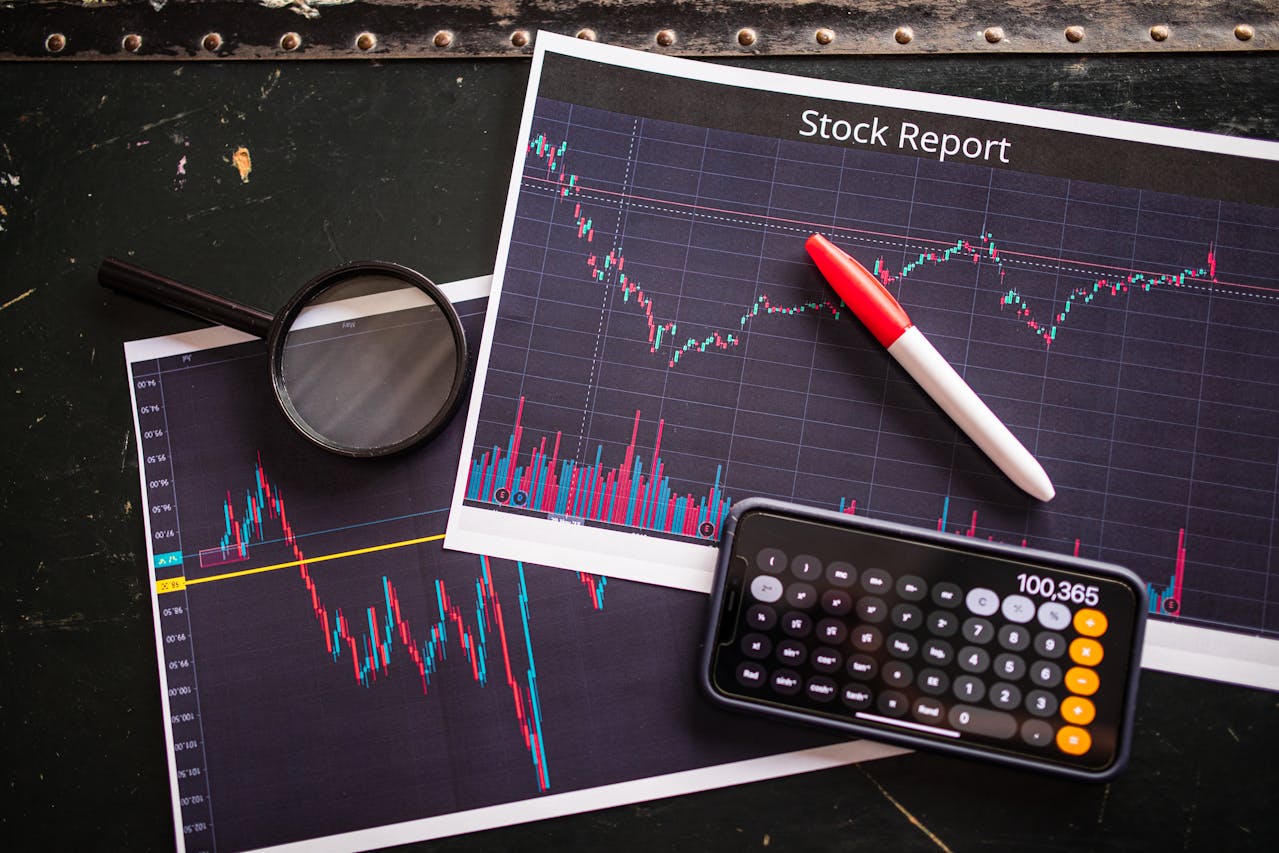
When you view a price chart, the price tells you the direction in which the market has moved. The volume of a trade indicates the level of participation involved in that movement. Without volume, price action lacks context. This is why traders often say that volume confirms the price. ‘Volume Analysis’ helps traders identify the conviction, liquidity and strength underlying market movements. It is one of the most fundamental, yet widely utilized, tools in technical analysis.
This guide explains the meaning of trading volume, how volume analysis works and how traders apply it in actual market conditions.
What is Volume in Trading?
Stock volume- which represents the total number of shares traded over a specific period. Is a crucial tool for investors. It provides significant insights into market activity and liquidity, thereby serving to validate market movements and facilitate better trading decisions. High volume generally indicates active markets and improved order execution, making volume a vital component in technical analysis and trading strategies.
- Trading volume denotes the total number of shares or contracts traded in the market over a specific timeframe, typically a single trading day.
- Technical analysts utilize volume to validate market movements and to identify potential entry and exit points within stock price trends.
- Automated trading- including high-frequency trading, now contributes significantly to daily stock volume. Thereby influencing overall market dynamics.
- High trading volume generally signifies active markets characterized by strong liquidity, which leads to more efficient order execution.
- Understanding stock volume helps investors gauge market interest and make informed trading decisions; however, individual strategies and perspectives continue to play a pivotal role.
What is Volume Analysis?
Volume analysis is a technique used to evaluate the number of shares or contracts of a security that have been traded over a specific period. Widely utilized by technical analysts, volume analysis helps forecast future price movements and identify the underlying strength or weakness of the market.
By understanding how changes in trading volume correlate with price movements, investors can gain deeper insights into the dynamics of the stock market. We will explain how volume analysis can signal market trends, influence trading decisions and play a role in broader trading strategies.
How to Analyse Stock Volume?
Some investors utilize technical analysis, a strategy that employs changes in stock prices to inform decisions regarding the buying and selling of shares. Technical analysts primarily seek to identify the optimal entry and exit prices for trading; in this context, trading volume levels are crucial, as they provide indications of where the best buying and selling opportunities might lie.
In technical analysis, volume serves as a key indicator, as it measures the relative significance of any market movement. Whether significant market movements gain credibility, or conversely, fall under a cloud of suspicion; depends on the volume observed while those movements are taking place. The higher the trading volume accompanying a price movement, the more significant that movement is considered within this analytical framework. Conversely, low volume renders a movement less significant.
Analysts use bar charts to quickly assess trading volume. When the bars on a bar chart rise above the average level, it indicates high volume and consequently, underlying strength; at a specific market price. By examining bar charts, analysts can use volume data to validate observed price movements. If trading volume increases while the price is moving up or down, that movement is considered a strong price trend. If traders wish to confirm a price reversal at a support (or ‘floor’) level, they look for a substantial volume of buying activity.
Conversely, if traders want to confirm that a support level has been breached, they look for low buying volume from purchasers. To confirm a price reversal at a resistance (or ‘ceiling’) level, traders look for a substantial volume of selling activity. Conversely, to confirm that the resistance level has been breached, they look for significant buying volume from buyers.
Why Volume Analysis is Important in Trading
Trading volume is significant because it indicates the level of investor interest in a specific company. Furthermore, it reflects the ‘momentum’ generated when a particular sector or stock is trending upward. Notably, it is crucial to recognize that volume also serves to signal the status of a trend, particularly as that trend approaches its conclusion.
Relationship Between Price and Volume
An increase in a stock’s ‘trading volume’ (i.e., the number of shares bought and sold) can have a significant impact on its price. However, ‘high volume’ is not always the sole reason for a change in a stock’s price.
A stock’s price is influenced by numerous factors. Nevertheless, volume often serves to confirm whether or not a specific market trend exists. When observed in the context of a price rise or a broader market rally, volume can act as a useful indicator. If trading volume is exceptionally high while the market is simultaneously bullish, this may signal that the stock market is strong and fundamentally sound.
Therefore, when analyzed in conjunction with other indicators, volume can sometimes serve as a measure of the market’s underlying strength.
Let us understand this better with the help of examples:
- When a stock’s price is declining, but its trading volume is simultaneously increasing, this may indicate that the current market trend is shifting downward.
- Conversely, if the market is rising and trading volume is also increasing, this may suggest that the market trend is moving in an upward direction.
As mentioned above, analysing trading volume proves beneficial for both traders and investors.
Many long-term investors; such as institutional investors like mutual funds, prioritize stocks that exhibit high trading volume. Similarly, ‘intraday traders’, who are required to square off their trading positions within a relatively short timeframe, actively seek out stocks that possess high market liquidity.
While trading volume is undoubtedly important, it is essential to consider other factors as well before investing in a specific stock. A comprehensive decision; arrived at after a thorough consideration of all relevant factors, enables investors to make significant strides in their wealth-creation journey.
Volume Analysis Strategy
Volume-trading strategies are primarily used to determine the strength of a prevailing trend. Some of the most common strategies employed by traders are as follows:
Volume Breakout Strategy
A breakout occurs when the price moves rapidly above a resistance level or below a support level (this movement is also referred to as a ‘breakdown’). When either of these movements is accompanied by volume that is higher than average, it is considered a reliable signal. To confirm the direction of the movement, traders wait for specific candlestick formations to appear beyond the support or resistance levels.
Volume Trend Strategy
This strategy is used to confirm an ongoing trend. If volume increases during an uptrend or a downtrend, it signals strong participation from buyers and sellers, respectively. Conversely, if volume decreases while the price is rising, it indicates that the trend is weakening.
Volume Exhaustion Strategy
Following a prolonged uptrend, extremely high volume typically indicates that institutional investors are beginning to sell while retail traders are still buying. Conversely, at the bottom of a downtrend, unusually high volume signals “capitulation”- the final stage of the decline. In both scenarios, a trend reversal may subsequently occur.
Volume Divergence Strategy
If the price is reaching new highs but volume is not rising correspondingly, this is termed “bearish divergence,” implying that buyer interest is waning. Conversely, if the price is hitting new lows while volume is simultaneously declining, this suggests that selling pressure is subsiding.
VWAP Pullback Strategy
Primarily utilized in intraday trading to identify mean-reversion points. When the price deviates significantly; either above or below the VWAP, traders anticipate a pullback toward the mean.
Frequently Ask Questions
1. How is trading volume calculated?
Trading volume refers to the total number of shares of a specific stock that have been bought and sold (traded) over a particular period. It is not calculated; instead, it is simply counted and subsequently recorded (reported).
2. What does ‘volume’ mean in the context of shares?
In the stock market, ‘volume’ refers to the total number of shares bought and sold during a specific period.
3. What is considered ‘good’ volume for a stock?
Traders define ‘good’ trading volume in various ways. In this context, the best approach is to conduct your own research regarding the volume levels you should expect, or to seek advice from an expert.
4. Does trading volume affect a stock’s price?
While trading is in progress, volume does not directly affect a stock’s price; however, it can influence the pattern of price fluctuations (movements).
5. What does it mean if a stock’s volume is ‘1’ (one)?
If a stock’s trading volume is ‘one’, it means that only a single share was bought and sold during that specific measurement period.
Conclusion
Volume analysis is a powerful tool that helps traders understand market activity and confirm price movements. By studying trading volume along with price action, traders can identify strong trends, reliable breakouts, and possible reversals. For beginners, learning volume analysis is an important step toward improving trading decisions. Instead of relying only on price charts, combining volume analysis with proper risk management can lead to more consistent and informed trading strategies.
Disclaimer
This article is for educational purposes only and not financial advice. I am not a SEBI-registered advisor. Please consult your financial advisor before investing.
If you have any questions, feel free to contact us.
Thank you for visiting our StockTrades Blog.

Mrunmay is a Data Analytics enthusiast with a background in Software Engineering and Machine Learning. He has completed professional training in SQL, Python, Data Analysis and ML and has worked on multiple data-driven projects. With a strong interest in stock market analysis and technical trading strategies, he focuses on simplifying complex market concepts into practical and easy-to-understand guides for traders.
Note: The information shared is for educational purposes only and not financial advice.
Pingback: Support and Resistance in the Stock Market