
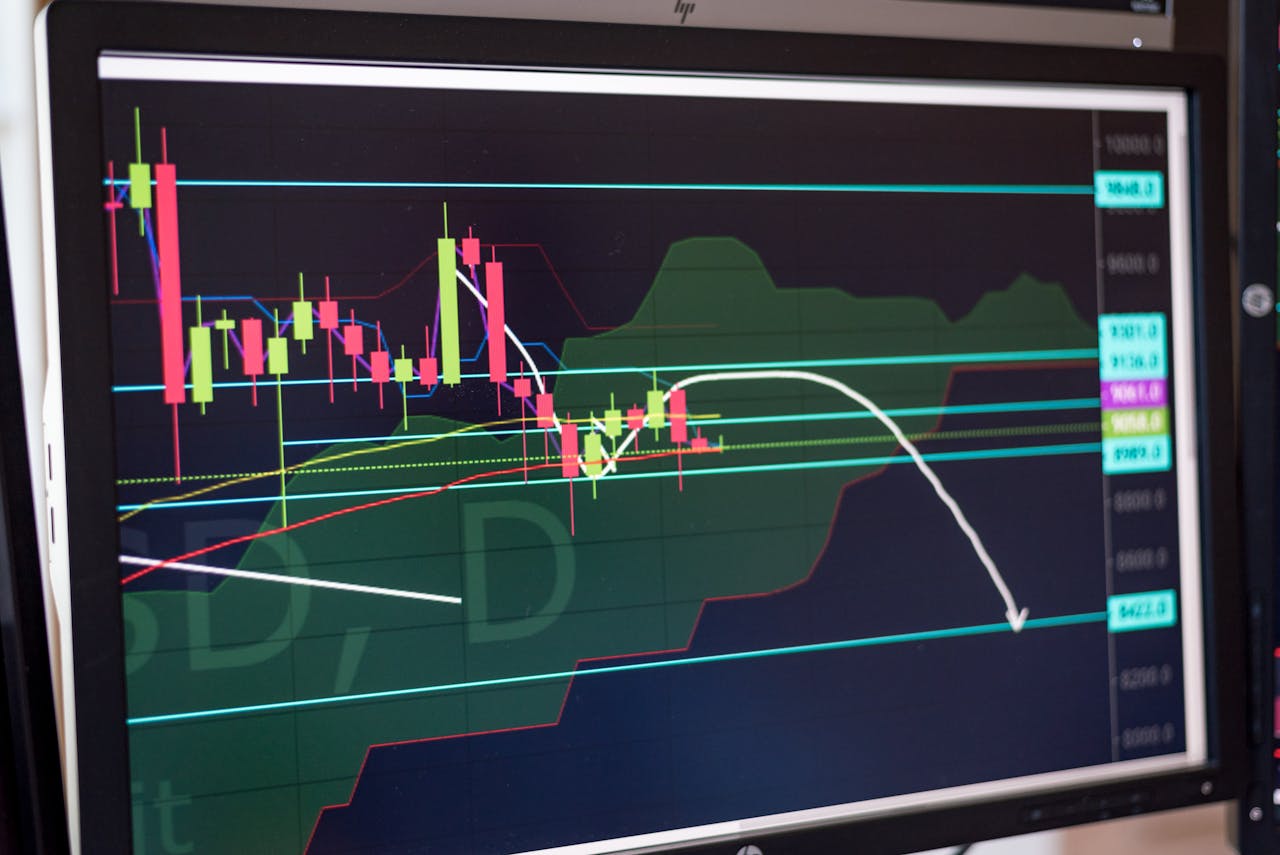
Choosing between rapid day trading and long-term investing can be challenging. This is where swing trading stands out. Unlike day traders who constantly monitor the market, swing traders aim to capture price ‘swings’ (fluctuations) over a few days or weeks. This makes it an ideal strategy for those with limited time. In this post, we will analyse a proven swing trading strategy to help you identify high-probability setups and manage risk effectively.
What is Swing Trading?
Swing trading is generally defined as a short-term trading strategy spanning a period of more than one day but less than one month. Day traders typically aim to capture a portion of a major price movement. Whereas swing traders seek to capture the entire “leg”, or the complete upward or downward swing of the movement.
Swing trading is executed in various forms; some traders base their decisions on traditional chart patterns, such as the Head and Shoulders pattern. Others trade based on short-term market sentiment, while some adopt a more quantitative approach.
Principles of Swing Trading
Some key principles of swing trading that you should understand are as follow:
Timeframe
The duration of a trade can range from 2 to 10 trading days, though it may occasionally extend to several weeks.
Generally, analyze price movements on daily and 4-hour charts.
Risk-Reward
Most swing traders maintain a risk-reward ratio of at least 1:2. A typical example of such a setup involves risking approximately ₹1,000 to generate a profit of ₹2,000 or more.
Tools Used in Swing Trading
In swing trading, technical indicators, chart patterns, and volume analysis are effectively utilized to identify potential entry and exit points.
The fundamental tools you will be using are as follows:
1. Technical Indicators:
Moving Averages (MA): EMAs (20-day EMA, 50-day EMA) – along with dynamic support/resistance zones, help in identifying the direction or trend at a specific point in time.
Relative Strength Index (RSI): Indicates whether a stock is overbought or oversold, thereby helping to refine the timing of entry and exit points.
MACD (Moving Average Convergence Divergence): Useful for identifying crossovers and changes in momentum.
Bollinger Bands: Help in analyzing price volatility and extreme price levels.
2. Chart Patterns:
Patterns such as Flags, Triangles, Head-and-Shoulders and Double Tops/Bottoms are crucial, as they indicate whether a trend is likely to continue or reverse.
3. Volume Analysis:
Price movements accompanied by volume are generally more reliable. If a price movement, such as a breakout or a pullback, is accompanied by a significant surge in volume, the movement is likely to be more valid.
4. Support and Resistance Levels:
Support and Resistance are key price levels that often serve as focal points where buying and selling interest tends to concentrate. Traders can utilize these price levels to determine where to place their stop-losses or profit targets.
By combining these tools, swing traders develop a rules-based system that minimizes emotional influence and enhances consistency in their trades.
Best Swing Trading Strategy for Beginners
Here are some strategies you can adopt for swing trading:
1. Pullback Strategy
Enter the market before or during a pause in a strong trend.
This strategy is naturally well-suited for trend-following setups that utilize Moving Averages or Fibonacci Retracement levels.
2. Breakout Strategy
Buy above resistance and sell below support after the price breaks out of a consolidation pattern.
This typically occurs due to increased volume or specific candlestick patterns.
3. Reversal Strategy
Look for signs that a trend is reversing by utilizing indicators such as divergence (RSI or MACD) or chart patterns like Double Tops or Double Bottoms.
Swing Trading vs. Day Trading
Although both swing trading and day trading aim to generate short-term profits, they can differ significantly in terms of duration, frequency, magnitude of returns, and analytical methodology.
Day traders typically seek to exit a trade within a span of a few hours, minutes, or sometimes even seconds, and often execute multiple trades within a single day. Due to this extremely short timeframe, day traders generally aim to secure smaller, more frequent profits, unless they are trading during a major news event or economic announcement, which could cause an asset’s price to skyrocket or plummet suddenly.
Generally, day traders pay little attention to market fundamentals, as the likelihood of these factors changing within a single day is minimal. The seemingly “random fluctuations” in prices that occur on a minute-to-minute basis may appear to long-term traders as mere noise; however, day traders view them as tradable price movements. And since fundamental factors are unlikely to influence these minute price changes, day traders often rely on technical analysis to anticipate these subtle shifts in supply and demand.
Conversely, swing traders aim to target larger market fluctuations that unfold over more extended periods and across a wider price range. Significant price movements occurring over the span of several days or weeks can often be sensitive to investor reactions regarding fundamental developments. Consequently, swing traders utilize technical setups to implement an approach that is more grounded in fundamental principles.
Understanding the difference helps beginners choose the right approach.
| Factor | Swing Trading | Day Trading |
|---|---|---|
| Holding Time | Days to weeks | Same day |
| Stress Level | Low | High |
| Screen Time | Less | More |
| Risk | Moderate | High |
| Best For | Beginners | Experienced traders |
Swing trading is generally more suitable for beginners.
Advantages and Disadvantages of Swing Trading
Advantages of Swing Trading
- Enhances the potential for short-term profits by capitalizing on most market fluctuations
- Allows for reliance solely on technical analysis, thereby simplifying the process
- Less time pressure compared to day trading
- Helps avoid restrictions applicable to Pattern Day Traders
Disadvantages of Swing Trading
- Swing trade positions are subject to market risks overnight and over weekends.
- Long-term trends may be overlooked in favour of short-term price movements.
- It requires a greater time commitment compared to long-term investing.
- Sudden market shifts can lead to significant losses.
Frequently Ask Questions
1. What is Swing Trading?
Swing trading is a strategy focused on capturing short- to medium-term price movements, where trades are typically held for a few days to a few weeks. It mainly relies on technical analysis, market trends, and chart patterns.
2. How is Swing Trading different from Day Trading?
- Swing Trading: Trades are kept open for multiple days.
- Day Trading: All trades are opened and closed within the same day.
Swing trading is less time-intensive and works well for people who have other commitments.
3. Can you use Options for Swing Trading?
Yes, swing trading can be done with options. It helps traders take advantage of price direction while limiting risk. For better results, you need to understand strategies like straddles and spreads.
4. Is Swing Trading Risky?
Yes, just like any other trading strategy, swing trading involves risk. Market movements can be unpredictable, and prices may not always move as expected; this can potentially lead to losses. However, employing proper risk management techniques; such as using ‘stop-loss’ orders, can help mitigate some of these risks.
5. Is Swing Trading Suitable for Beginners?
Yes, if beginners take the time to learn the fundamentals and adhere to a systematic approach, swing trading is certainly suitable for them.
Conclusion
Swing trading is one of the best trading styles available. By focusing on short-term price movements, traders can capitalize on profitable opportunities within the market. However, success in swing trading depends on discipline, proper risk management, and adherence to a structured strategy. By utilizing simple tools, such as moving averages, support and resistance levels, and volume; beginners can enhance their trading decisions. Remember, trading is not about making quick profits, but rather about consistency and making smart decisions.
Disclaimer
This article is for educational purposes only and not financial advice. I am not a SEBI-registered advisor. Please consult your financial advisor before investing.
If you have any questions, feel free to contact us.
Thank you for visiting our StockTrades Blog.

Mrunmay is a Data Analytics enthusiast with a background in Software Engineering and Machine Learning. He has completed professional training in SQL, Python, Data Analysis and ML and has worked on multiple data-driven projects. With a strong interest in stock market analysis and technical trading strategies, he focuses on simplifying complex market concepts into practical and easy-to-understand guides for traders.
Note: The information shared is for educational purposes only and not financial advice.